The End of Materialism?

The End of Materialism?

Materialism is a philosophy that teaches the only thing which exists is what science call matter or energy. For the materialist there is no spirit, soul or even consciousness.  As a philosophy, it represents the foundational world-view of atheism.  Materialism and its birth child of atheism will never be the preeminent  world view  because it leaves humanity empty and without meaning.  Any illusions of meaning it might offer are quickly drained by suffering, the brevity of life and him him death.  Of course, there are some who have the intellectual ability to build and maintain a huge bulwark of superficial and peripheral arguments to protect their illusions of meaning.  The most that can be said about these arguments is that they divert people’s attention away from reality onto their quibbles, which seems to work fairly well for those who have very little expectations of life. This is one of the biggest problems and dangers of atheism; it has the tendency to hollow out people and diminish their expectations or hopes for the future or life in general, which in turn precipitates an existential crisis that often leads to nihilism.

In his classic book “The Denial of Death”, Ernest Becker points out that humanity denies its death by creating illusions.  He claims that one of these delusions is religion, but he acknowledges that it’s just one among many.  The most typical method of delusion is simply to force the idea of death to the back of your mind.  Most humans are so well-practiced at this deception that they do it with very little effort or consciousness.

In fact, it has been my experience that people of faith think and talk about death more than the non-religious.  In this, they demonstrate more of a grasp on reality, at least in this one area, greater than the non-religious.  The secular man appears to avoid the issue of death altogether, which seems to be a far deeper form of denial, than trusting in an afterlife.

Of course, you must demonstrate that religion is false, not just flawed, before you can totally dismiss it as a delusion, which Becker doesn’t attempt.  However, in his conclusion Becker does demonstrate the utilitarianism of religion and affirms that religion does work well in dealing with the fear of death.  This dispels the shallow idea of the new atheist type that says religion poisons everything and intrinsically has no value.

The end of materialism can be seen throughout the west and especially in eastern Europe where we have a preview of its demise in Russia where materialism was forced on the population by an atheistic government for decades, at which point it left the populace hollowed out and empty.  The Russian model of materialism demonstrates the unworkable and the destructive nature of materialism and the atheism that follows.

I personally feel that the biggest problem with materialism is that no one can live as though they really believed it.  If consistent, the materialist must also be a determinist and deny the free will of man and I have yet to see a man live as though he is a slave to the mindless movement of matter.  One of my pragmatic friends put it this way; “I’ve never known a man that didn’t look both ways before crossing a street.” You cannot live a consistent life and be a materialist.

Carl Jung Thoughts on Atheism


In following video, Carl Jung presents some material that should make the new atheist type rethink the virtue of their constant attacks on religion as though virtuous.  Jung points out that a loss of faith and religion is the reason why so many people today are despondent.  Young also shows that a loss of faith tends to move a culture towards State-ism along with the development and growth of a will for power in the human spirit, which results in mental disorders and the totalitarian state.

In a past article I pointed out that atheism is a phenomenon which seems to take place at the end of a civilization and is one of the marks of a decaying culture.  It is hard to tell whether atheism is the cause, or the fruit, of a culture in declension.  However, either way it is not a positive force in the human community.

An honest unbeliever, Dr. E. Wengraf does not seem to share the enthusiasm of the new atheist in debunking people’s faith,  “Every piece of anti-religious propaganda seems to me a crime.  I surely do not wish it to be prosecuted as a crime, but I consider it immoral and loathsome.  This not because of zeal for my convictions, but because of the simple knowledge,  acquired through long experience, that, given the same circumstances, a religious man is happier than the irreligious.  In my indifference and skeptical attitude toward all positive faith, I have often envied other men to whom deep religiosity has given a strong support in all the storms of life.  To uproot the souls of such men is an abject deed.  I abhor any proselytizing.  But still, I can understand why one who believes firmly in a saving faith tries to convert others.  But I cannot understand a propaganda of unbelief.  We do not have the right to take away from a person his protecting shelter, be it even a shabby hut, if we are not sure we can offer him a better, more beautiful house.  But to lure men from the inherited home of their souls, to make them err afterward in the wilderness of hypotheses and philosophical question marks, is either criminal fatalism or criminal mindlessness.”


A Letter to a Young atheist (2)

A Letter to a Young atheist

You asked if I had read any books written by atheists.  I’ve read a number of the books written by the four Horsemen and many other atheists.  After reading them, I still think atheism is a mental disorder that shows up at the end of any declining civilization.  Even if every religion throughout the world is wrong that doesn’t make atheism right.

You argument that the division in the religion world is proof that there is no God demonstrates a shallow understand of the human condition. In fact, if there is an all powerful being you would expect finite creatures like humans to be divided concerning their belief about it.  So, what you point out to be inconsistent is very much consistent with a belief in an all-knowing God.  The disunity of belief is the very thing you should expect to find when a finite creature believes in an all-powerful God.

Your quibbles about there being no proofs for the existence of God border on the hysterical.  First, there is an enormous difference between evidence and proof.  A huge percentage of human knowledge has little to no proof of its own accuracy.  The majority of human knowledge believed is based on the authority of a teacher, and to have faith in that teacher.  Very few people ever see the evidence or proof for numerous beliefs.  These beliefs range from Darwinian evolution to theories of the multi-verse.  If you believe these things, it’s because someone told you to believe it and you accepted it by faith and you accepted it as logical because they framed the evidence in a world view that you had already accepted. When talking about evidence we are using the language of science, when you start talking about proofs you are using the language of philosophy not science. Science cannot possibly prove or disapprove the idea of God[1].  Science recognizes its limitations.  Why can’t you atheists? The truth is that you don’t understand science any better than you do religion.

However, science can offer evidence that seems at least to support the idea of a supreme consciousness that created all things.  The apparent design that we see in the universe is one of these things and the other is the fact that the universe had a beginning. Both scientific theories support the idea of consciousness more than a belief that the world and the universe were just cobbled together by a mindless force. However, it does not prove it be on a shadow of a doubt.

If you’re looking for proofs in philosophy, you can forget it.  Philosophically, it would be hard to prove that you even exist, much more than proving the nonexistence of a god.  Human beings are small ignorant creatures whose existence is based pretty much on faith in many presuppositions, which cannot be proven. Our ambiguous position in the universe tends to cause insecurity so we gravitate towards seeking certitude (proofs) of our beliefs. In this religion is actually more honest than secular people when it says that we walk by faith and not by sight.

The new atheists are small-minded people who have an over-inflated view of themselves and their intelligence.  As a result, they are fundamentalist in their thinking and they still live in a world of proofs.  This alone is an unbelievable paradox because of their belief system, or their lack of beliefs.  For in their belief system of materialism there couldn’t be such a thing as truth for truth[2] is a concept that belongs in a religious framework that believes in an Ultimate Authority as a foundation of human knowledge.  The atheist appeal to truth demonstrates that they are still thinking in a religious framework and in essence, for many their lack of belief has become a religion.

[1] The US National Academy of Sciences has gone on record with the following statement: ‘Science is a way of knowing about the natural world. It is limited to explaining the natural world through natural causes. Science can say nothing about the supernatural. Whether God exists or not is a question about which science is neutral.” Taken from “Who made God?, a searching For a Theory Of Everything” by Fay Weldon.

[2] In a materialistic worldview there cannot be a traditional moralistic truth. Atheism will always lead to relativism where truth is what a person believes.

A Letter to a Christian Science Teacher

A Letter to a Christian Science Teacher

Your Zionist interpretation of the Bible seems to align with those that you dislike; i.e. fundamentalist’s, and your defense of science seems to contradict your statement, that it is not a religion.  However, you defend it as though it was your religion.  Furthermore, the way you defend it seems to be a little over the top.  If you view it simply as a method of finding the truth; i.e. the scientific method, then why the big fuss?  No one disagrees with the scientific method.  The question is do scientists really follow it?  I personal think not.  The scientific method is used pretty much to make the scientific community respectable and they keep it as law about as well as the Jews kept the Law of Moses.

I think it is self-evident that in most people’s minds science has become a metaphysical concept[1], which goes way beyond people in white jackets applying the scientific method to their research.  Science has become the authority that people appeal to in a secular atheistic culture and for many, science has evolved into a new religion.  It used to be that people would appeal to the Bible or the church.  They would say “Because the Bible says so” or “Because the church says so”.  Now it is nothing but “science says”.  For many in our culture the only knowledge that has not been debunked and found useless is called science.  This is nonsense; however it is fostered by many in the scientific community.  To me there is far more truth in a good work of art than in most scientific theories, or more power in a song than in all of the science in the world.  Science has given us many toys and made life easier in some ways, but I think it hasn’t given many people meaning, peace of mind, joy or love.  In fact, many scientists are arrogant jackasses.  “Knowledge puffs up, love builds up”.  Science does not teach this, the Bible does.  The false god (idol) of science has taken us to the very edge of the abyss.  It has given evil men the power to take away our humanity and turn us into machines.  The state is already using it to manipulate the herd in any direction it wishes.  Science is now the handmaid of the state, just as religion was a century ago.  I personally, value my freedom more than comfort, ease and pleasure.  To me science is like religion, it is human and therefore needs to be criticized and critiqued often.  The power that it has attained is equal to that of religion and is one of the powers that the Bible speaks about.  Remember that our battle is not with flesh and blood but rather with the principalities and powers in the heavenly places.  Those heavenly powers have their counterpart on this earth.  What do you thinks stands behind the metaphysical concept of science?

Science is the false god of many worldly people.  It promises them salvation if they will give it their money and commitment.  It promises health and wealth to all that follow it.  It claims to be able to predict the future (global warming).  Something the Bible says only God can do.  Not only does it claim to know the future, it also claims it can control it.  It also boasts of its miracles of healing and its signs and wonders.  To me this sounds a little like the antichrist in the book of Thessalonians[2] and surely sounds like religion.  I think science is what you make of it, but for many they have made it their faith and religion.

[1] Science is a concept that does not existence in reality. If it does where is it? Can I see it, smell it, taste it or touch it? I can do all these things to the people that practice it but I cannot do it to it. In this manner, it resembles religion.

[2]  ” The coming of the lawless one will be in accordance with the work of Satan displayed in all kinds of counterfeit miracles, signs and wonders, and in every sort of evil that deceives those who are perishing.  They perish because they refused to love the truth and so be saved.  For this reason God sends them a powerful delusion so that they will believe the lie and so that all will be condemned who have not believed the truth but have delighted in wickedness” (2 Thess 2:8-12).


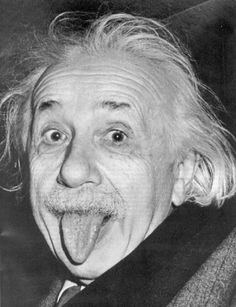
God and Einstein


God and Einstein

There has been much debate about the religious beliefs and faith of Albert Einstein.  Both the atheist community and the believing community have claimed him as one of their own.  However, I believe it can be demonstrated that Einstein was somewhat of a mystic and would not be overly comfortable in either group.

“The most beautiful thing we can experience is the mysterious.  It is the source of all true art and science.  He to whom this emotion is a stranger, who can no longer pause to wonder and stand rapt in awe, is as good as dead: his eyes are closed.  This insight into the mystery of life, coupled though it be with fear, has also given rise to religion.  To know that what is impenetrable to us really exists, manifesting itself as the highest wisdom and the most radiant beauty which our dull faculties can comprehend only in their most primitive forms — this knowledge, this feeling, is at the center of true religiousness.  In this sense, and in this sense only, I belong in the ranks of devoutly religious men.”

Rudolf Otto wrote a book entitled, ‘The Ideal Of The Holy’ in which he attempts to explain the spiritual experience that Einstein describes and what Otto goes on to refer to as the numinous which he believes is a sign which points to the deity and could be likened to the voice of God that beckons man to his true center.

The sub-title to Otto’s book, ‘The Idea of the Holy’ is ‘An inquiry into the non-rational factor in the idea of the divine and its relation to the rational’.  In the book Otto points out that numinous is not rational or reasonable but it’s not irrational or unreasonable, it is simply outside of those categories.  You might call it super-rational.

It is this numinous experience that the atheist lacks.  Because he has not experienced it, it is impossible for him to understand someone who has experienced it like Einstein.  Einstein had experienced the Totally Other which lied beyond his explanatory powers to communicate it to those who had not experienced it, those that he referred to as dead or blind.  Otto’s book is the best attempted I have seen to put the experience into words.  You can get a PDF copy at the below address.

Click to access Cman_046_3_Harvey.pdf

What is Atheism? A Metaphysical Answer.

What is Atheism? A Metaphysical Answer.

Is atheism simply the lack of faith in a deity, or is it more?  In reality it is both. For many atheists it is simply a lack of faith in a deity, but for many others it is the foundation of a worldview which shapes the way that they look at the whole of reality.  As a worldview it borrows from ideologies and philosophies to form a hodgepodge foundation of the ‘philosophy of non-belief.’

This philosophy of non-belief has as its center the denial and dislike of authority, which in the end can only lead to anarchy of the worst kind.  In fact, all anarchists are atheists however all atheists are not anarchists.  We could also say of atheism that it is the highest degree of human alienation and rebellion against authority and especially the ultimate authority which is God.  We could also say it is the worst distortion of the religious impulse in man, for in the end, it makes the image of God (man) into God, which is the highest form of idolatry.  It promotes man as God, or at the least it makes him think he is God; for only a god could know that there is no God in the universe or outside of it.

Some will retort that atheism has nothing to do with religion or God.  However, at a metaphysical level it is the anti-image of God whose image it needs for its very existence.  It is, therefore, nothing more than a distorted reflection of that which it denies.  This is what Nietzsche meant when he said “If you gaze long enough into an abyss, the abyss with gaze back into you”

It’s distorted reflection of religion is seen in that it possesses a number of the attributes of religion[i].  Most religion has as  its main attribute, a sin message and a salvation message.  And what do we find when we look at the new atheist’s movement, we find a sin message.  The sin is religion and your freedom and salvation will come when you accept the good news of the gospel of atheism.  Like most religion, the new atheist’s movement also has their evangelists; those who spew out a steady diet of doubt and hatred of religion as they preach to their true believers who are mesmerized by their leaders ability to turn words and flaunt their intellect.  You know, kind of like the TV evangelist who promotes their brand of religion every Sunday on the television[ii].

The true source of much, but not all atheism, comes from a hidden rift with authority[iii] which is then easily redirected by clever men towards God.  In other words it comes more from one’s disposition than from their intellect.  This is why we see atheism increasing when people feel oppressed by poverty, authority and social alienation.  I believe that an analysis of the French Revolution and also the Communist Revolution would clearly demonstrate this.  Atheism, for those with the right disposition is nothing more than a hidden rebellion against authority which they feel is oppressive[iv].  However, for it to be organized, as it was in the French Revolution and the Communist Revolution, you need a group of sophists and opportunists who can promote and direct its anger.  Of course, the new atheists have these opportunists in the three horsemen of their movement; Hutchinson, Harris and Dawkins.  All of which have become millionaires selling their books to the herd that follows them.

So we could say that the source of much atheism begins with the seeds of the things that form one’s disposition.  These things can range from genetics to early child development[v].  Of course, we cannot totally dismiss the intellect.  However, the intellect has much less to do with it than most atheists would like to admit to. In this I am not saying that disposition pre-determines one’s beliefs or behavior.  But it does predispose us towards certain behavior and beliefs

[i] In Russia the atheist communist even had a church that they called the church of scientific atheism.

[ii] It is important to notice that the old atheist type lacks these attributes of religion. Making it something different from the new atheist movement.

[iii] The mass man is angry about his place in life and holds the authority responsible.

[iv] This is why so many of them are angry and militant. They fundamentally believe that all authority is oppressive.

[v] Many of the new atheists seem to have a problem with their fathers, which they tend to project on a deity.  Though I freely admit that I personally have done no scientific study of this.

Can You Be good Without God? 

Can You Be Good Without God?

Can you be good without God? Of the various questions raised in the theist/atheist debate, this question has, I believe, occasioned more witless commentary than any other. That witlessness is again on display in an essay for the Daily Beast, “Can you be good without God?” by Brandon Withrow of the University of Findlay. Withrow interviews a bunch of ticked-off atheists, who get the answer wrong.

He discusses a study titled, “Global evidence of extreme intuitive moral prejudice against atheists”:

“If God did not exist, then we would have to invent him,” said the French philosopher Voltaire. His point: that without a divine being to check right and wrong, any number of atrocities are possible and could go unpunished.

A recent study (of more than 3,000 people in 13 countries) published in the journal Nature Human Behavior echoes Voltaire’s maxim. Looking at intuitive thinking — presumptions drawn by individuals through unconscious biases — researchers led by Will M. Gervais, an associate professor of psychology at the University of Kentucky, discovered that most individuals intuitively conclude that a serial killer is more likely to be an atheist (approximately 60 percent) than religious (approximately 30 percent).

From the study’s Abstract:

Preliminary work in the United States suggests that anti-atheist prejudice stems, in part, from deeply rooted intuitions about religion’s putatively necessary role in morality. However, the cross-cultural prevalence and magnitude — as well as intracultural demographic stability — of such intuitions, as manifested in intuitive associations of immorality with atheists, remain unclear. Here, we quantify moral distrust of atheists by applying well-tested measures in a large global sample (N = 3,256; 13 diverse countries). Consistent with cultural evolutionary theories of religion and morality, people in most — but not all — of these countries viewed extreme moral violations as representative of atheists. Notably, anti-atheist prejudice was even evident among atheist participants around the world. [Emphasis added.]

The issue is simple, though. The answer to the question we started with hinges on what you mean by “without God.” Let’s take a look.

  1. If God does not exist, you cannot be good. You cannot be evil. You can’t conform or fail to conform to anytranscendental standard, because if there is no God, there are no transcendental standards. There is no Moral Law if there is no Moral Lawgiver. If there is no God, there are merely opinions and consequences of acting on opinions. We may label certain opinions “good,” but that’s just our opinion. What we really mean by calling something “good” is that we like it. Which is fine, as long as we understand that “good without God” is just a metaphor for “something I (or we) like.” If there is no God, all of our “moral” decisions are just opinions — perhaps opinions we like, or opinions we don’t like — but neither good nor bad.
  2. If God does exist, but you don’t believe in Him, then of course you can be “good without God”, in the sense that you can be good without believingin God. It is central to the moral theology of all the great faiths that non-believers may act in accordance with Moral Law without belief in God and even without knowing Moral Law in any formal sense. The Moral Law is written in our hearts, theists universally agree, and we feel the weight of morality whether we believe in God or not.

Now of course an additional question can be asked: Do theists actually behave better than atheists? I think this is the question that ticked off the atheists in the essay. If theists do, on the average, behave better than atheists, there are certainly many exceptions on both sides, and arguments can be made that particular groups of theists/atheists behave better/worse than other groups of atheists/theists. Mankind is a confusing mess.

Atheists, however, are on quicksand when they argue about “goodness” and “evil,” given that their metaphysics, if taken seriously, utterly rules out the existence of either. Also, it would seem to me that atheists could be a bit more contrite in light of the fact that whenever they have assumed state power — from the Reign of Terror to the gang currently launching missiles from North Korea — atheism has brought hell to earth.

The godless would garner more respect if they took their own metaphysics seriously, and if they showed at bit of contrition for what real atheists have done when in power. Author unknown.

The Darwinian Evolution Narrative

The Darwinian Evolution Narrative

The more I read on evolution the more I have come to realize that the theory of Darwinian Evolution is based more on narrative than facts.  By this I mean that it is based on a well thought out story without a lot of real facts to back it up.  Most often it is based on conjecture or outright fiction.  I also have noticed that the facts are often made to fit the story instead of the story fitting the facts.

How could this happen?  How could so many intelligent people embrace such a theory as fact?  There are three answers to this question.  The first one is that they have accepted the scientific maxim or dogma that everything must be explained naturalistically, leaving no other possible explanation, except maybe for the seeding of the earth by alien life forces.  This dogma also hinders any real attempt by those inside the system to attempt to disprove the theory.  The second is the failure to see that the theory is not the facts.  Some confuse the map for the territory.  The third is that many in the educated class had accept science as a new faith. Some have gone so far as to give it a name, it’s called scientism; the belief that only true knowledge must come through science.  Well this may make Johnny a real brilliant boy but it also makes him a very narrow-minded boy.

Evolution in its most basic form is a fact.  Life changes and adapts to its environment.  We can see this happening in the barnyard and sometimes it is aided and directed by man (consciousness)[1].  However, Darwin’s theory of evolution is not a fact, it is an interpretation of the facts, with the interpretation of the facts being dependent on the narrative and there is no narrative without a secular or atheist world view.  Historical fact verifies that the materialistic worldview came first, then the narrative and then the theory.  It is a well-known fact that Darwin and others in his time believed in the theory of evolution before there were any scientific facts to support it[2].  This simply means that it would be very easy for this theory to have a social origin.

Evolutionist’s are constantly asking the question what narrative best fits the facts?  By this they’re usually talking about a theological narrative that they suppose existed.  However the truth is there is no theological narrative as to how God made the world.  The Bible simply states that God did it and any good theologian would never suppose or assert that they were capable of explaining how God created the world.  They clearly understand that such an event could only be spoken about metaphorically in story, poetry and myth.  Theologians understand the difference between truth, and the truth.  Theology leaves room for mystery and science leaves none. For that reason, science has the tendency to fill the gap’s with narrative and speculation, which it then attempts to falsify.  At least that is what it claims to do and should do.

In this, the Darwinian theory of evolution is a theory of necessity for those accepting a materialistic or atheistic worldview.  The only alternatives would be for them to just simply say they don’t know. Unfortunately, the majority are not willing to do that or even try to base their study and research on an attempt to figure out how consciousness created all things. In most cases this is because they have a prior commitment to materialism, like Johnny, they have become small-minded. It should also be noted that because of their prior commitment to materialism it would be very difficult to attempt to falsify a theory which you have already committed to as the only one possible.

However, this insight has not led me to any expectation on my part that the theory will be overthrown sometime in the near future. The Theory itself has evolved into a secular myth that supports a secular world view. The science has ended, religious faith has taken its place.

[1] I find it strange that people can accept that man can direct evolution and at the same time hold to the belief that a God could not do it.

[2]  “The Road of Science and The Ways to God” By Stanley L. Jaki Page 282


The Darwinian Evolution Narrative or Myth

 The Darwinian Evolution Narrative

The more I read on evolution the more I have come to realize that the theory of Darwinian Evolution is based more on narrative than facts.  By this I mean that it is based on a well thought out story without a lot of real facts to back it up.  Most often it is based on conjecture or outright fiction.  I also have noticed that the facts are often made to fit the story instead of the story fitting the facts.

How could this happen?  How could so many intelligent people embrace such a theory as fact?  There are three answers to this question.  The first one is that they have accepted the scientific maxim or dogma that everything must be explained naturalistically, leaving no other possible explanation, except maybe for the seeding of the earth by alien life forces.  This dogma also hinders any real attempt by those inside the system to attempt to disprove the theory.  The second is the failure to see that the theory is not the facts.  Some confuse the map for the territory.  The third is that many in the educated class had accept science as a new faith. Some have gone so far as to give it a name, it’s called scientism; the belief that only true knowledge must come through science.  Well this may make Johnny a real brilliant boy but it also makes him a very narrow-minded boy.

Evolution in its most basic form is a fact.  Life changes and adapts to its environment.  We can see this happening in the barnyard and sometimes it is aided and directed by man (consciousness)[1].  However, Darwin’s theory of evolution is not a fact, it is an interpretation of the facts, with the interpretation of the facts being dependent on the narrative and there is no narrative without a secular or atheist world view.  Historical fact verifies that the materialistic worldview came first, then the narrative and then the theory.  It is a well-known fact that Darwin and others in his time believed in the theory of evolution before there were any scientific facts to support it[2].  This simply means that it would be very easy for this theory to have a social origin.

Evolutionist’s are constantly asking the question what narrative best fits the facts?  By this they’re usually talking about a theological narrative that they suppose existed.  However the truth is there is no theological narrative as to how God made the world.  The Bible simply states that God did it and any good theologian would never suppose or assert that they were capable of explaining how God created the world.  They clearly understand that such an event could only be spoken about metaphorically in story, poetry and myth.  Theologians understand the difference between truth, and the truth.  Theology leaves room for mystery and science leaves none. For that reason, science has the tendency to fill the gap’s with narrative and speculation, which it then attempts to falsify.  At least that is what it claims to do and should do.

In this, the Darwinian theory of evolution is a theory of necessity for those accepting a materialistic or atheistic worldview.  The only alternatives would be for them to just simply say they don’t know. Unfortunately, the majority are not willing to do that or even try to base their study and research on an attempt to figure out how consciousness created all things. In most cases this is because they have a prior commitment to materialism, like Johnny, they have become small-minded. It should also be noted that because of their prior commitment to materialism it would be very difficult to attempt to falsify a theory which you have already committed to as the only one possible.

However, this insight has not led me to any expectation on my part that the theory will be overthrown sometime in the near future. The Theory itself has evolved into a secular myth that supports a secular world view. The science has ended, religious faith has taken its place.

[1] I find it strange that people can accept that man can direct evolution and at the same time hold to the belief that a God could not do it.

[2]  “The Road of Science and The Ways to God” By Stanley L. Jaki Page 282